Why Good Handwriting Is Important for Students


Discover why good handwriting is important for students, how it improves academic performance, confidence, communication, and overall learning success.
Good handwriting is often seen as just neat writing, but it is much more than that. It is a valuable life skill that helps students express their thoughts clearly, learn more effectively, and perform better in school. Even though technology has become a part of everyday education, students still spend a significant amount of time writing by hand—whether it’s taking notes, completing assignments, or writing examinations. Developing good handwriting is not about creating perfect-looking letters; it is about building a skill that supports academic success and boosts confidence throughout life.
What Is Good Handwriting?
Good handwriting is writing that is neat, clear, and easy to read. It involves forming letters correctly, maintaining consistent size, leaving appropriate spacing between words, and writing at a comfortable speed. The purpose is not to create artistic or decorative writing but to ensure that the message is understood without any confusion. When handwriting is legible, communication becomes much more effective.
Why Does Good Handwriting Matter?
Although computers, tablets, and smartphones are widely used today, handwriting remains an essential part of education. Students continue to write class notes, homework, assignments, and examination papers by hand. When handwriting is neat and organised, it helps present ideas in a structured manner. It also reflects care, discipline, and attention to detail. These qualities make handwriting an important skill even in the digital age.
It Makes Answers Easier to Read

Teachers evaluate hundreds of answer sheets and assignments throughout the academic year. When a student’s handwriting is neat and legible, teachers can read and understand the answers without unnecessary effort. On the other hand, untidy handwriting may make even a correct answer difficult to interpret. Clear handwriting ensures that the student’s knowledge is communicated accurately, reducing the chances of misunderstandings.
It Helps Students Learn Better
Writing by hand is an active learning process. Instead of simply copying information, students engage their minds while writing, which improves understanding and retention. Many students find that they remember concepts more easily when they have written them down themselves. Handwritten notes also become an excellent resource for revision before examinations, making learning more meaningful and effective.
Better Notes Lead to Better Revision
Neatly written notes save valuable time during exam preparation. Clear headings, proper spacing, and organised content make it easier to locate important information quickly. Instead of struggling to read messy notes, students can focus on understanding and revising the subject. Good note-taking habits developed through neat handwriting continue to benefit students throughout their academic journey.
It Boosts Self-Confidence
Students who are proud of their handwriting often feel more comfortable submitting assignments and participating in classroom activities. As they notice improvements in their writing, their confidence naturally grows. This confidence extends beyond handwriting and positively influences their willingness to express ideas, answer questions, and participate in learning. Better handwriting can even reduce stress during examinations.
It Teaches Patience and Discipline
Improving handwriting doesn’t happen overnight. It requires regular practice, attention to detail, and consistency. As students focus on letter formation, spacing, and alignment, they gradually develop patience and self-discipline. These qualities are valuable not only in academics but also in everyday life. Handwriting practice becomes a simple yet effective way of developing positive habits.
It Strengthens Fine Motor Skills
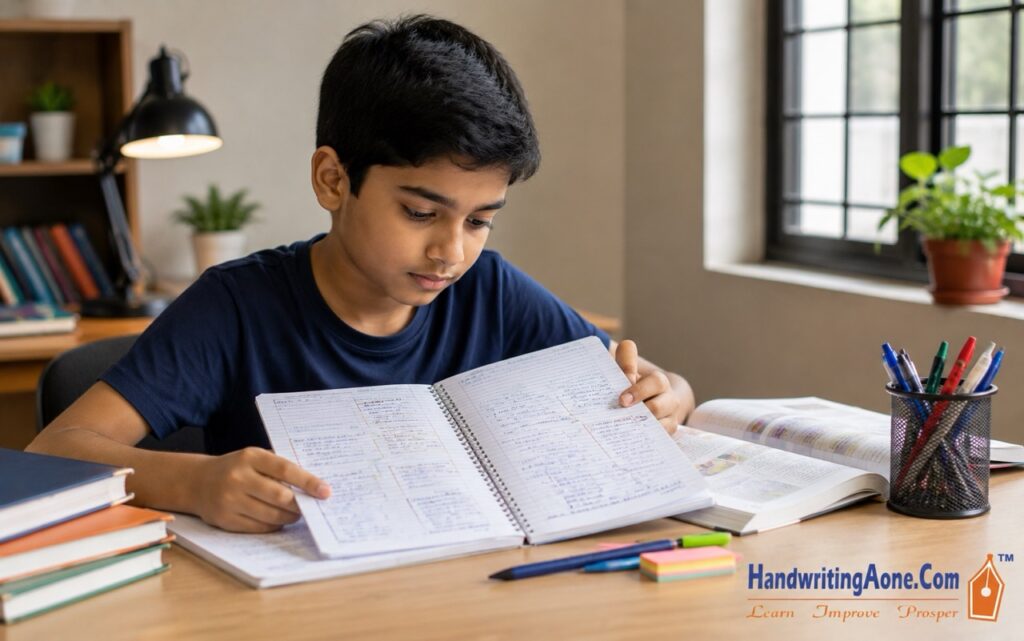
Writing involves the coordinated movement of the fingers, hands, and wrists. For younger children especially, regular handwriting practice strengthens these muscles and improves pencil control. Better hand coordination allows students to write more comfortably and efficiently. These fine motor skills also support many other classroom activities that require precision and control.
It Improves Concentration
Good handwriting requires students to pay attention to every word they write. This encourages them to stay focused and reduces careless mistakes. Over time, regular writing practice helps improve concentration and attention span. Many teachers observe that students who write carefully also become more attentive during classroom activities. The ability to concentrate while writing often benefits learning in other subjects as well.
It Creates a Positive Impression
The way work is presented often creates the first impression. A neatly written assignment immediately appears organised and well-prepared. While marks should always be awarded based on knowledge, clear presentation makes the teacher’s job much easier. Good handwriting reflects responsibility, sincerity, and respect for the person reading the work.
It Makes Revision Simpler
Before examinations, students usually depend on their own notebooks for revision. If those notes are written clearly, revising becomes faster and less stressful. Important concepts can be identified easily, allowing students to spend more time understanding the material instead of trying to decipher untidy writing. Well-maintained notes become one of the best study resources.
It Reduces Common Writing Mistakes
Students who write carefully are less likely to skip letters, miss words, or forget punctuation marks. Proper spacing between words also makes sentences easier to understand. As students become more mindful while writing, they naturally develop the habit of reviewing their work before submitting it. This leads to greater accuracy in written communication.
It Supports Better Examination Performance

Good handwriting alone does not guarantee high marks, but it certainly helps students present their answers more effectively. Clear and legible writing ensures that examiners can understand every point without difficulty. When students are confident about their handwriting, they can focus more on answering questions instead of worrying about presentation. This often contributes to better overall examination performance.
My Experience as a Handwriting Trainer
During the past two decades, I have had the opportunity to train more than 10,000 students with different handwriting difficulties. Many of them initially believed that poor handwriting was something they had to live with forever. However, after learning the correct techniques and practising consistently, they achieved remarkable improvements. Along with better handwriting came greater confidence, improved classroom performance, and a more positive attitude toward learning. These experiences have repeatedly shown me that good handwriting is a skill that can be learned by anyone.
Common Misconceptions About Handwriting
One of the biggest misconceptions is that handwriting cannot be improved after childhood. In reality, students, teenagers, and even adults can significantly improve their handwriting with proper guidance and regular practice. Another common belief is that neat handwriting must always be slow. In fact, with the right techniques, students can develop handwriting that is both clear and reasonably fast.
Advice for Parents
Parents have a major influence on their child’s handwriting habits. Encouraging children to practise for just a few minutes every day is far more effective than expecting long practice sessions occasionally. Celebrate small improvements instead of demanding perfection. Providing a comfortable writing space with good lighting, proper seating, and the right posture can also make a noticeable difference. Patience and encouragement go a long way in helping children develop confidence.
Suggestions for Teachers
Teachers can play an important role by demonstrating proper letter formation and encouraging neat presentation in daily classroom work. Brief handwriting activities can easily become part of the regular routine without affecting the academic schedule. Constructive feedback, combined with positive encouragement, motivates students much more effectively than criticism. Regular guidance helps students maintain consistent improvement.
Tips for Students
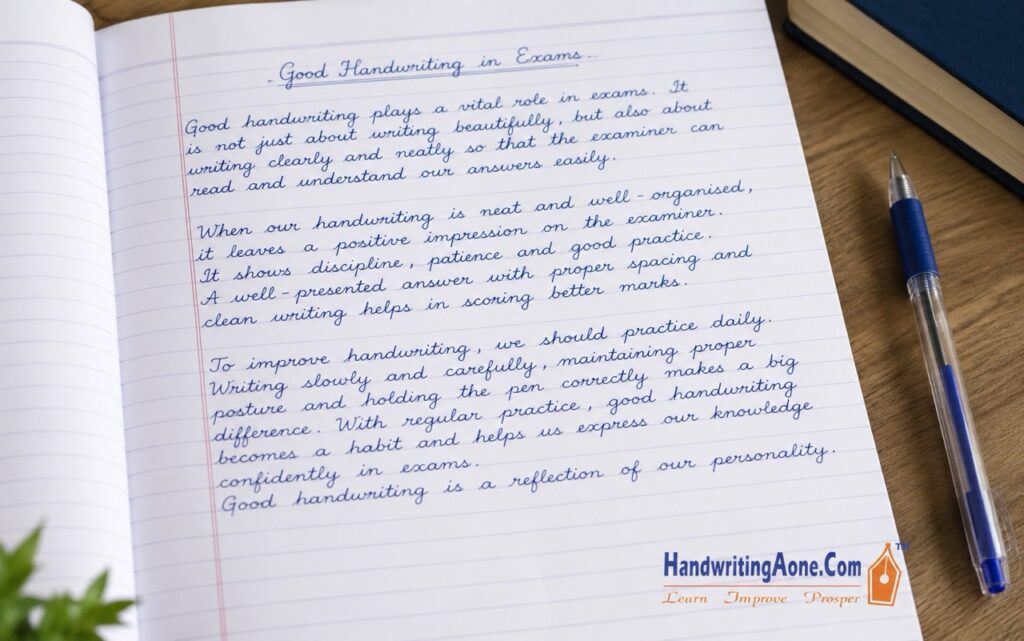
Students should first focus on writing correctly before trying to increase their speed. Sitting with proper posture, holding the pen comfortably, and maintaining consistent spacing between words are all important habits. Practising for just 10 to 15 minutes each day can produce noticeable improvements over time. Remember, consistency is always more valuable than practising for several hours once in a while.
The Most Important Lesson
Good handwriting is about much more than making writing look attractive. It is about expressing ideas clearly, learning more effectively, and developing confidence through regular practice. Students who improve their handwriting often become more organised, attentive, and disciplined in other areas of their education as well. The benefits extend far beyond the classroom.
Final Thoughts
Good handwriting continues to be one of the most valuable skills a student can develop. It supports clear communication, improves learning, builds confidence, and encourages better study habits. The encouraging news is that handwriting is not a talent reserved for a few people—it is a skill that can be improved with the right guidance and consistent practice. Every student has the ability to develop clear, legible handwriting, and the effort invested today can provide lifelong benefits in education and beyond.
About the Author
R. Bhashkar
Founder & Chief Mentor, HandwritingAone.com
Educationist, Handwriting Expert, Qualified Handwriting Analyst, Calligrapher, Grapho Therapist & Personality Development Trainer with over 20 years of practical experience.
-
20+
Years of
Experience -
10,000+
Students
Trained -
25,000+
Handwriting
Analyses -
Trusted by
Parents, Students
& Educators
Our mission is to help every individual Learn, Improve & Prosper in their personal and academic journey.
Take the Next StepTowards Better Learning
Every student is different. With the right guidance, practice and encouragement, meaningful improvement is possible. If you would like professional guidance for your child or yourself, explore our learning programmes or speak with our team.
20+ Years of Experience10,000+ Students TrainedTrusted by Students & Parents