What Is Calligraphy? A Complete Beginner’s Guide

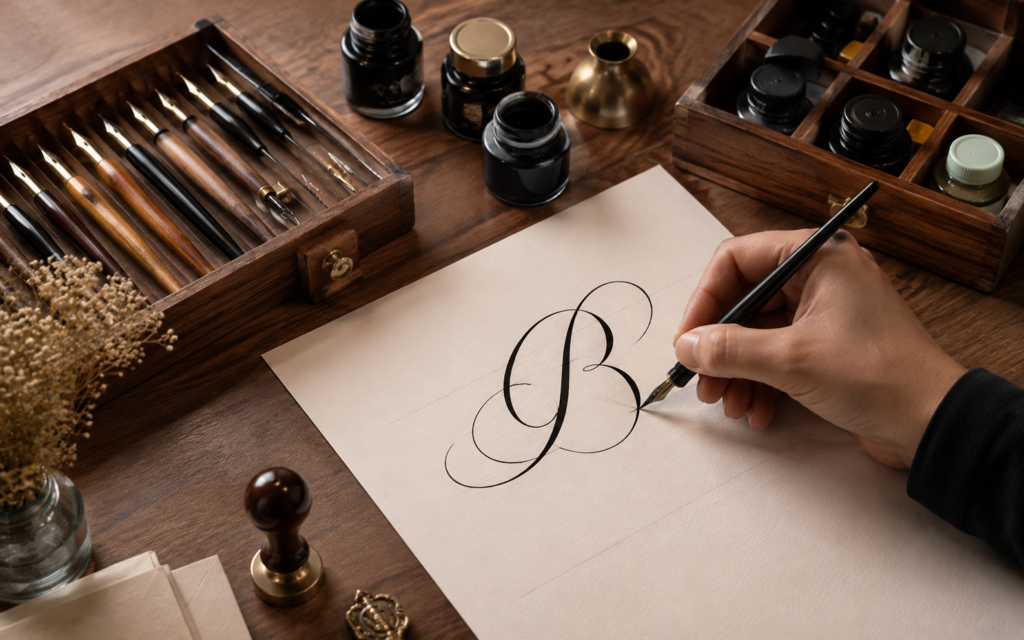
Learn what calligraphy is, how it differs from handwriting, explore popular styles and tools, and discover practical tips to begin your calligraphy journey with confidence.
Introduction
One of the most common questions I receive from students, parents, and teachers is, “What exactly is calligraphy, and how is it different from good handwriting?” After more than 20 years as an educationist, handwriting expert, calligrapher, and personality development trainer, I have realised that many people admire beautiful lettering but hesitate to learn it because they believe it is difficult. The truth is that calligraphy is a wonderful skill that anyone can learn with patience, proper guidance, and regular practice. During my interactions with more than 10,000 students, I have seen children who initially struggled to write neatly gradually create elegant and artistic lettering that surprised even themselves. Calligraphy is not only about writing beautifully; it is also about developing patience, concentration, creativity, and confidence. In this beginner’s guide, I would like to share everything you need to know about calligraphy in a simple and practical way.
What Is Calligraphy?
Calligraphy is the art of creating beautiful and decorative letters using controlled and deliberate pen movements. Unlike everyday handwriting, calligraphy focuses on style, balance, rhythm, and visual appeal. Every stroke is made with attention and care, turning ordinary words into artistic expressions. While handwriting is mainly used for communication, calligraphy adds elegance and creativity to written language. It is truly where art and writing come together.
How Is Calligraphy Different from Handwriting?
Many parents ask me whether calligraphy and handwriting are the same. Although both involve writing, their purposes are quite different. Handwriting is meant for daily communication, note-taking, and examinations, whereas calligraphy is an artistic skill used for greeting cards, certificates, invitations, quotations, logos, and decorative projects. Good handwriting values speed and readability, while calligraphy values beauty and precision. Both skills complement each other beautifully.
Why Calligraphy Is Becoming Popular Again
Despite the increasing use of digital devices, the appreciation for handwritten art continues to grow. People enjoy personalised invitations, handmade greeting cards, journals, and artistic wall quotes because they carry a personal touch. I have noticed that many students develop an interest in calligraphy after seeing creative lettering on social media or school projects. Beautiful writing continues to inspire people across all age groups. Creativity never goes out of fashion.
Anyone Can Learn Calligraphy
One lesson I have learned over the years is that artistic talent is not a requirement for learning calligraphy. I have taught children who believed they had poor handwriting, yet they gradually developed elegant lettering through regular practice. Success in calligraphy depends more on patience than natural talent. Imagine creating beautiful letters that make every greeting card or school project look special. That journey begins with one simple stroke at a time.
The Benefits of Learning Calligraphy
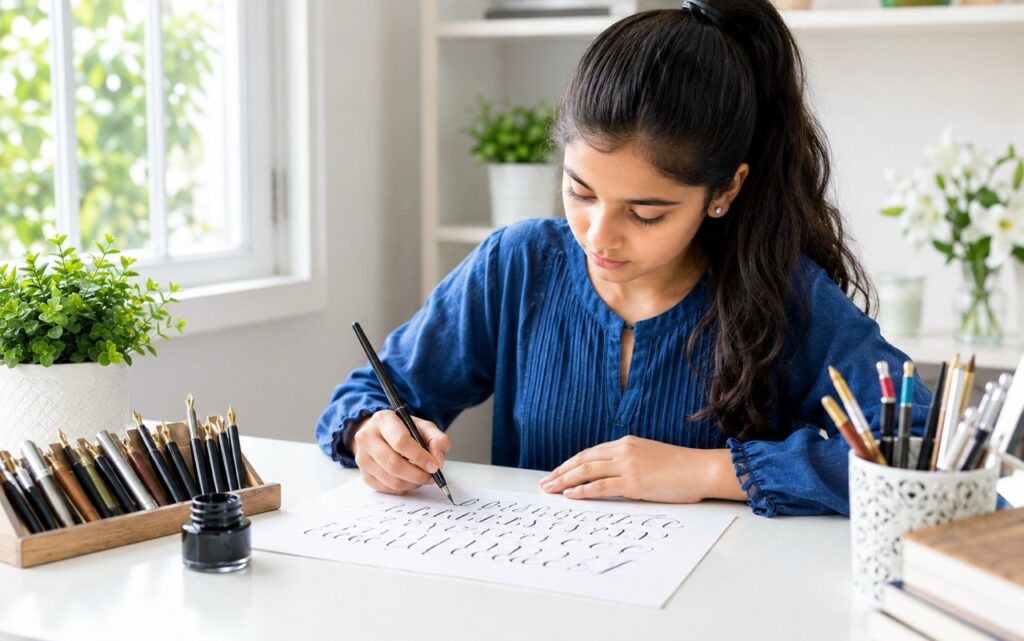
Calligraphy offers much more than attractive writing. During my classroom sessions, I have observed improvements in concentration, patience, hand control, creativity, and self-confidence among students who practise regularly. The slow and mindful movements encourage focus and reduce unnecessary distractions. Many learners also experience a sense of relaxation while practising beautiful lettering. Calligraphy becomes both an art and a calming activity.
Essential Tools for Beginners
Many beginners assume they need expensive materials to start learning calligraphy. In reality, a few basic tools are enough. A quality calligraphy pen or brush pen, smooth paper, pencil, eraser, ruler, and practice sheets provide a good foundation. I always encourage students to begin with simple materials before exploring advanced tools. Learning the technique is far more important than buying expensive equipment.
Understanding Basic Strokes
Every beautiful alphabet is built using a few fundamental strokes. Before writing complete letters, I encourage beginners to practise straight lines, curves, ovals, loops, and connecting strokes. These exercises strengthen hand control and improve consistency. Just as musicians practise basic notes before performing songs, calligraphy learners practise strokes before creating elegant words. Strong fundamentals make learning easier.
Learn the Correct Pen Grip
Holding the pen correctly improves comfort and control. I often observe beginners gripping the pen too tightly, making their movements stiff and uncomfortable. A relaxed grip allows smoother strokes and better consistency. Proper posture and comfortable hand positioning also reduce fatigue during longer practice sessions. Small adjustments create noticeable improvements.
Practise Slowly Before Increasing Speed
Many students become excited and try to write beautiful words immediately. I gently remind them that calligraphy is not a race. Slow practice develops accuracy, balance, and rhythm. Speed naturally improves as confidence increases. Patience during the early stages leads to graceful lettering later.
Consistency Is More Important Than Long Practice

One question I hear frequently is, “How long should I practise every day?” My answer is simple: practise consistently rather than for long hours. Even fifteen to twenty focused minutes daily can produce excellent improvement over time. Regular repetition helps your muscles remember each movement naturally. Small daily efforts create lasting progress.
Learn to Observe Letter Spacing
Beautiful calligraphy is not created by attractive letters alone. The spacing between letters and words is equally important. Balanced spacing creates harmony and improves readability. During my demonstrations, I encourage students to observe the empty spaces as carefully as the letters themselves. Good spacing gives writing a professional appearance.
Experiment with Different Calligraphy Styles
Once beginners become comfortable with the basics, they can gradually explore different styles. Modern calligraphy, Gothic, Italic, Copperplate, Brush Lettering, and Faux Calligraphy each have their own charm. Trying different styles keeps learning enjoyable and develops creativity. Every learner eventually discovers a personal favourite. Exploring new styles makes the journey exciting.
Use Calligraphy in Everyday Life
One of the best ways to improve is by using calligraphy regularly. Write birthday cards, motivational quotes, bookmarks, certificates, gift tags, journals, or classroom charts using your new skills. Practical application increases confidence much faster than practice sheets alone. Every completed project becomes a source of pride. Creativity grows through regular use.
Common Mistakes Beginners Should Avoid
Every beginner makes mistakes, and that is completely normal. I often notice students rushing their strokes, pressing too hard, ignoring guidelines, or becoming discouraged too quickly. Instead of worrying about perfection, focus on gradual improvement. Every mistake teaches valuable lessons. Consistent practice always overcomes early challenges.
How Parents Can Encourage Young Learners
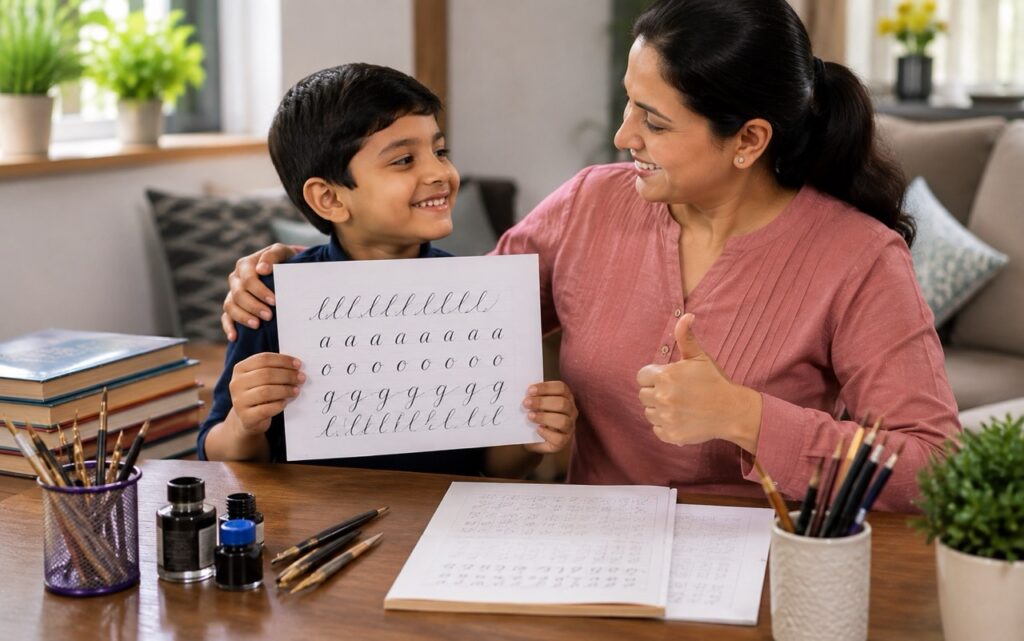
Many parents ask me how they can support children learning calligraphy. I encourage them to appreciate effort rather than expecting immediate perfection. Displaying a child’s artwork at home or praising steady improvement builds enthusiasm. Imagine your child becoming excited to practise because their efforts are genuinely appreciated. Positive encouragement creates lasting motivation.
From My Experience: Calligraphy Builds Confidence
After teaching thousands of students, I have noticed that calligraphy often changes much more than handwriting. Children who initially doubted their artistic abilities gradually become proud of their creations. Completing a beautifully written project gives them genuine satisfaction. Confidence grows naturally when they realise they can create something elegant with their own hands. These moments are truly rewarding to witness.
From My Experience: Creativity Blossoms with Practice
One of the greatest joys in my career has been watching creativity emerge through consistent practice. Students who once copied simple alphabets begin designing greeting cards, posters, certificates, and inspiring quotations. Their imagination becomes more active because calligraphy encourages creative thinking. I have seen remarkable improvements when learners practise patiently without comparing themselves to others. Every child has creative potential waiting to be discovered.
From My Experience: Patience Creates Beautiful Results
Many beginners become impatient during the first few weeks. I always remind them that every experienced calligrapher was once a beginner too. Beautiful lettering develops through hundreds of small improvements rather than overnight success. Small positive changes made consistently can create extraordinary long-term results. Patience is one of the greatest lessons calligraphy teaches.
Key Takeaways
Calligraphy is the beautiful art of decorative writing that combines creativity, discipline, and patience. Anyone can learn it with regular practice, proper guidance, and the right techniques. Start with simple tools, master the basic strokes, practise consistently, and enjoy the learning process without rushing. Parents and teachers can encourage children by appreciating progress rather than perfection. Every beautifully written word reflects not only artistic skill but also focus, dedication, and confidence.
Conclusion
Calligraphy is much more than writing attractive letters. It is a journey of self-expression, creativity, concentration, and continuous improvement. Whether you are a student, parent, teacher, or working professional, learning calligraphy can become a rewarding lifelong skill. Begin with patience, practise every day, and enjoy every small improvement. Before long, you will discover that beautiful writing has the power to bring joy not only to others but also to yourself.
About the Author
R. Bhashkar
Founder & Chief Mentor, HandwritingAone.com
Educationist, Handwriting Expert, Qualified Handwriting Analyst, Calligrapher, Grapho Therapist & Personality Development Trainer with over 20 years of practical experience.
-
20+
Years of
Experience -
10,000+
Students
Trained -
25,000+
Handwriting
Analyses -
Trusted by
Parents, Students
& Educators
Our mission is to help every individual Learn, Improve & Prosper in their personal and academic journey.
Take the Next StepTowards Better Learning
Every student is different. With the right guidance, practice and encouragement, meaningful improvement is possible. If you would like professional guidance for your child or yourself, explore our learning programmes or speak with our team.
20+ Years of Experience10,000+ Students TrainedTrusted by Students & Parents