How to Improve Writing Speed Without Losing Neatness


Learn practical ways to improve handwriting speed while maintaining neatness, clarity and consistency, with useful tips for students to write confidently during exams and daily work.
Introduction
One of the most common concerns I hear from students and parents is, “My child knows the answers but cannot complete the exam on time.” After working with more than 10,000 students over the last 20 years as an educationist and handwriting expert, I have realised that slow writing speed is one of the biggest reasons many students score fewer marks than they deserve. At the same time, I have also seen students spoil their handwriting while trying to write faster. The good news is that speed and neatness are not enemies. With the right techniques and regular practice, both can improve together. In this article, I would like to share practical methods that I have personally used to help thousands of students write faster while maintaining clear, neat, and legible handwriting.
Understand That Speed Comes from Practice, Not Rushing
Many students believe writing faster simply means moving the pen quickly. In my experience, rushing usually creates untidy handwriting, spelling mistakes, and unnecessary corrections. True writing speed develops through repeated practice until writing movements become smooth and natural. Imagine driving a vehicle confidently after months of practice compared to your very first lesson. Writing speed develops in exactly the same way. Patience always produces better long-term results than haste.
First Build Good Handwriting Habits
One lesson I have learned over the years is that neat handwriting forms the foundation for faster writing. If letter formation is inconsistent, the brain spends extra time correcting each movement. I always encourage students to first develop proper letter shapes before trying to increase speed. Once the movements become automatic, writing naturally becomes quicker. Good habits make speed effortless.
Hold the Pen Comfortably
During my handwriting classes, I often observe students gripping the pen too tightly. A tight grip causes hand fatigue and reduces writing speed. Holding the pen comfortably allows smoother movement across the page. Your fingers should guide the pen without unnecessary pressure. Small improvements in pen grip often create noticeable improvement in writing comfort.
Sit with the Correct Writing Posture

Writing posture directly affects both speed and neatness. I encourage students to sit comfortably with their back straight, feet placed properly on the floor, and the notebook positioned at a comfortable angle. Good posture reduces strain on the shoulders and wrist during long writing sessions. A relaxed body supports better handwriting. Comfortable writing encourages consistent performance.
Practise Writing Daily
Many parents ask me how long children should practise handwriting every day. My answer is usually simple: even fifteen to twenty minutes of focused practice can produce excellent improvement. Consistency matters far more than occasional long practice sessions. Daily writing trains the muscles and improves coordination. Small efforts repeated regularly create lasting results.
Learn Proper Letter Formation
Every alphabet should be written using efficient strokes. I have noticed that some students lift the pen unnecessarily or rewrite parts of letters repeatedly. These extra movements reduce writing speed. Correct letter formation creates smooth flow from one letter to another. Efficient movement saves valuable examination time.
Avoid Unnecessary Pen Lifts
One common habit that slows many students is lifting the pen too often. Whenever possible, connected writing movements improve rhythm and reduce interruptions. This does not mean joining every letter, but writing naturally without unnecessary breaks. Smooth movement creates better writing flow. A flowing style increases both speed and confidence.
Increase Writing Speed Gradually
Trying to double your writing speed overnight often leads to frustration. I advise students to increase their speed little by little each week. Set realistic goals and measure your improvement regularly. Imagine completing one extra paragraph today compared to last week. Gradual progress is easier to maintain than sudden changes.
Improve Finger and Wrist Flexibility
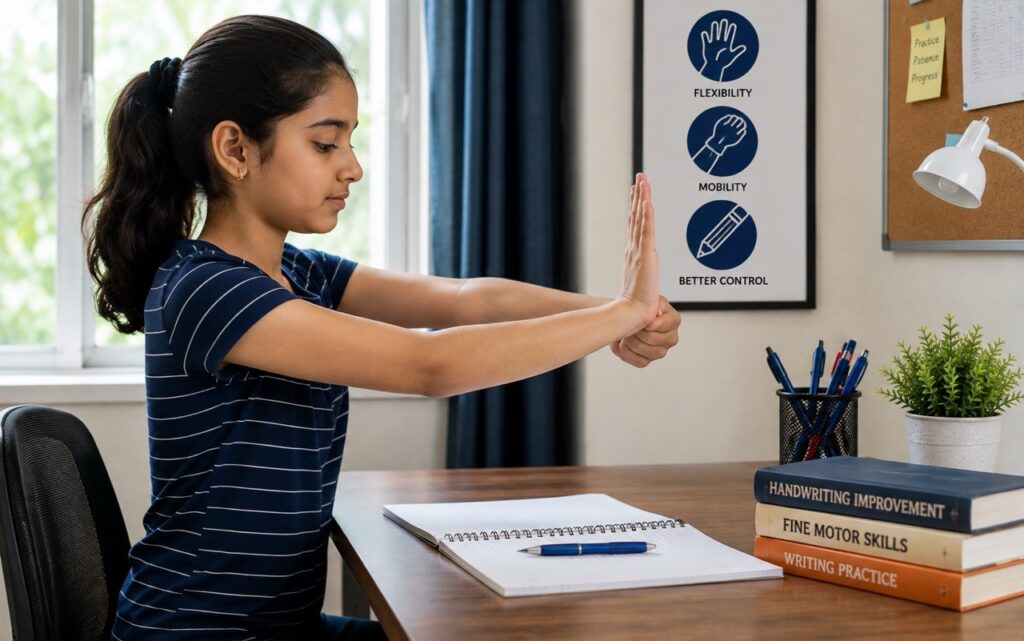
Writing involves the coordinated movement of fingers, wrist, and forearm. Gentle stretching exercises before practice sessions help reduce stiffness. Simple circular wrist movements and finger stretches improve flexibility. I have seen students write more comfortably after adding these small exercises to their routine. Flexible movements create smoother handwriting.
Use Timed Writing Practice
Timed writing is one of the most effective techniques I recommend. Select a passage and write for five or ten minutes while maintaining neatness. Compare both your speed and handwriting quality after every session. This method helps students balance speed with readability. Regular timed practice prepares them for real examinations.
Choose the Right Pen
Many students overlook the importance of writing instruments. A pen that writes smoothly without excessive pressure reduces hand fatigue. I encourage students to choose a comfortable pen that suits their writing style rather than following trends. The right pen allows consistent writing flow. Comfort improves confidence.
Strengthen Concentration While Writing
Distractions slow writing more than most students realise. Thinking about unrelated topics, looking around the classroom, or worrying about time interrupts writing rhythm. I encourage students to focus completely on one answer at a time. Concentrated writing becomes naturally faster. A focused mind produces better results.
Practise Writing Complete Answers
Writing isolated words or alphabets alone is not enough. During my classroom sessions, I encourage students to practise writing complete answers exactly as they would during examinations. This develops writing stamina and improves paragraph flow. Realistic practice builds examination confidence. Familiarity reduces anxiety.
Develop Better Time Management During Exams

Writing speed is only one part of examination success. Students should also learn to divide available time wisely among different questions. I advise beginning with questions they know well because early success builds confidence. Keep a few minutes at the end for revision whenever possible. Good planning supports faster completion.
Never Sacrifice Legibility for Speed
One mistake I occasionally notice is students writing so quickly that their answers become difficult to read. Examiners can only award marks for answers they can understand. Neat handwriting leaves a positive impression and reduces misunderstandings. Remember that readable writing is always more valuable than extremely fast but unclear writing. Balance is the key.
From My Experience: Every Student Can Improve
After teaching more than 10,000 students, I have realised that slow writing is rarely a permanent problem. I have worked with children who initially struggled to complete even half their examination paper. With proper guidance and regular practice, many of them gradually improved both their speed and handwriting. Watching their confidence grow has been one of the most satisfying parts of my career. Improvement is always possible.
From My Experience: Confidence Increases Writing Speed
One interesting observation I have made over the years is that confident students often write more smoothly than anxious students. Fear creates hesitation, and hesitation slows writing. I encourage students to trust their preparation and write calmly. Imagine entering the examination hall knowing you can complete every answer comfortably within the available time. That confidence itself improves performance.
From My Experience: Small Daily Practice Creates Big Results
Many people search for shortcuts to improve writing speed. My experience has taught me that consistent daily practice remains the most reliable method. I have seen remarkable improvements when students devoted just a few focused minutes every day to handwriting exercises and timed writing practice. Small positive changes made consistently can create extraordinary long-term results. Success is built one page at a time.
Key Takeaways

Improving writing speed without losing neatness is completely achievable with patience and consistent practice. Focus on proper letter formation, comfortable posture, correct pen grip, timed writing exercises, and gradual improvement rather than rushing. Choose a suitable pen, strengthen concentration, and maintain readable handwriting throughout every practice session. Parents and teachers can encourage progress by appreciating steady improvement instead of expecting overnight change. Every well-practised page brings students closer to examination success.
Conclusion
Writing speed is not a natural gift that only a few students possess. It is a practical skill that improves through proper techniques, discipline, and regular effort. Do not become discouraged if progress appears slow during the beginning. Every practice session strengthens your writing muscles and builds confidence for future examinations. Continue practising patiently, and you will soon discover that writing faster while maintaining neatness is entirely within your reach.
A Message from my Heart
During my journey of more than 20 years as an educationist, handwriting expert, grapho therapist, personality development trainer, and founder of HandwritingAone.Com, I have met thousands of students who believed they could never improve their writing speed. Many entered my classroom feeling worried because they regularly left examination papers incomplete. Yet, with patient guidance, consistent practice, and the right techniques, I watched them transform into confident writers who completed their papers comfortably while maintaining neat handwriting.
To every student reading this, I want you to remember that writing speed is not about racing against the clock. It is about developing smooth, confident, and efficient writing habits. Every page you practise today prepares you for tomorrow’s success. Never compare your progress with someone else’s. Focus on becoming a little better than you were yesterday, and the results will surprise you.
To every parent, your encouragement plays a vital role. Celebrate your child’s improvement, even if it seems small. A child who receives appreciation for sincere effort develops confidence and enjoys learning more. Avoid placing unnecessary pressure on speed alone. Neatness, clarity, and confidence are equally important.
To every teacher, thank you for inspiring students to develop good writing habits that will benefit them throughout their academic journey and beyond. Your patience and guidance often become the turning point in a child’s life.
I have seen children transform from slow and hesitant writers into confident students who complete examinations with ease. Those changes did not happen because of magic or shortcuts. They happened because of consistent practice, proper guidance, and the belief that improvement is always possible.
Imagine yourself entering your next examination with calmness instead of anxiety, writing confidently from the first answer to the last, and completing your paper with time to revise. That confidence can become your reality. Keep practising, remain patient, and never stop believing in your ability to improve. Small positive changes, repeated every day, can create extraordinary long-term success—not only in handwriting but in every area of your life.
About the Author
R. Bhashkar
Founder & Chief Mentor, HandwritingAone.com
Educationist, Handwriting Expert, Qualified Handwriting Analyst, Calligrapher, Grapho Therapist & Personality Development Trainer with over 20 years of practical experience.
-
20+
Years of
Experience -
10,000+
Students
Trained -
25,000+
Handwriting
Analyses -
Trusted by
Parents, Students
& Educators
Our mission is to help every individual Learn, Improve & Prosper in their personal and academic journey.
Take the Next StepTowards Better Learning
Every student is different. With the right guidance, practice and encouragement, meaningful improvement is possible. If you would like professional guidance for your child or yourself, explore our learning programmes or speak with our team.
20+ Years of Experience10,000+ Students TrainedTrusted by Students & Parents